What is AI searchability?
AI searchability is how easily AI assistants can find, understand, trust and recommend your brand. When a buyer asks ChatGPT, Gemini, Claude, Perplexity or Google's AI search a question in your category, your AI searchability decides whether you are named in the answer, described accurately, and cited as the source — or left out entirely while a competitor is recommended instead.
This guide explains what AI searchability is, how it differs from traditional SEO, what the AI assistants actually look at, and the practical steps that improve it.
From a page of links to a single answer
For twenty years, being discoverable meant ranking on a search results page. Buyers scanned ten blue links, opened a few, and formed their own shortlist. Your job was to be one of those links.
AI assistants collapse that process. The buyer asks one question and receives one confident answer naming one or two brands. There is no page two, no position eight to recover from. If the answer recommends a competitor, you were never in the running — and you probably never knew the conversation happened.
AI searchability is the discipline of being the brand the assistant trusts enough to name. It is sometimes called Generative Engine Optimisation (GEO) or AI visibility optimisation; the goal is the same.
AI searchability vs traditional SEO
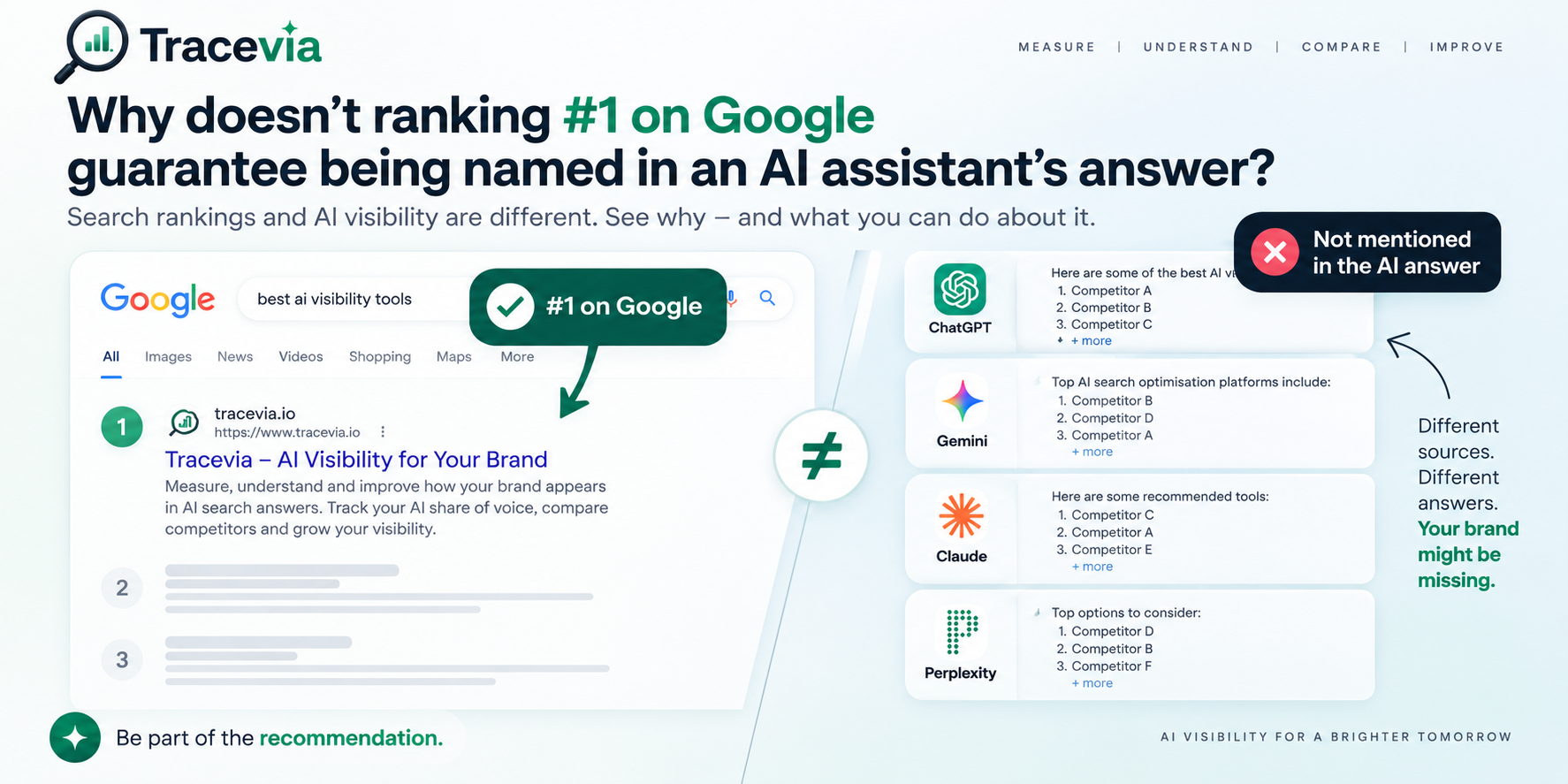
SEO and AI searchability overlap but are not the same discipline. SEO asks: where do I rank in a list? AI searchability asks: am I in the answer at all, and is the answer right?
A site can rank well on Google and still be invisible to ChatGPT, because the assistant never shows the results page. Equally, a smaller brand with clear structured data and strong third-party corroboration can be recommended ahead of a bigger competitor whose facts are scattered and inconsistent.
The practical difference is measurement. Rank tracking watches positions; AI searchability is measured by running the questions your buyers ask and scoring the answers — mention, prominence, positioning, domain citation, parent relationship and factual accuracy.
How to improve your AI searchability
- 1
Measure your baseline
Run a free check to see your AI-readiness and citation-readiness scores, and what a Google AI Overview says about your company name today.
- 2
Fix the machine-readable basics
Make sure robots.txt allows AI crawlers, publish an accurate llms.txt, and add JSON-LD structured data stating your name, category, founders and parent company.
- 3
Align your entity everywhere
Use one canonical description of who you are and what you do across your site, social profiles and directory listings. Inconsistency is the most common reason assistants hedge or confuse brands.
- 4
Build corroboration
Claim and complete your LinkedIn and YouTube presence, seek honest reviews and mentions, and make sure third parties describe you the same way you describe yourself.
- 5
Publish answer-shaped content
Create pages that define your category, answer real buyer questions in the first paragraph, and include honest comparisons — the material assistants prefer to cite.
- 6
Track and iterate
Re-run your buyer questions across the assistants regularly, watch your share of voice against competitors, and verify that fixes actually change the answers.
How searchable is your brand to AI?
One domain, two clear scores, and five priorities showing what is holding you back.